
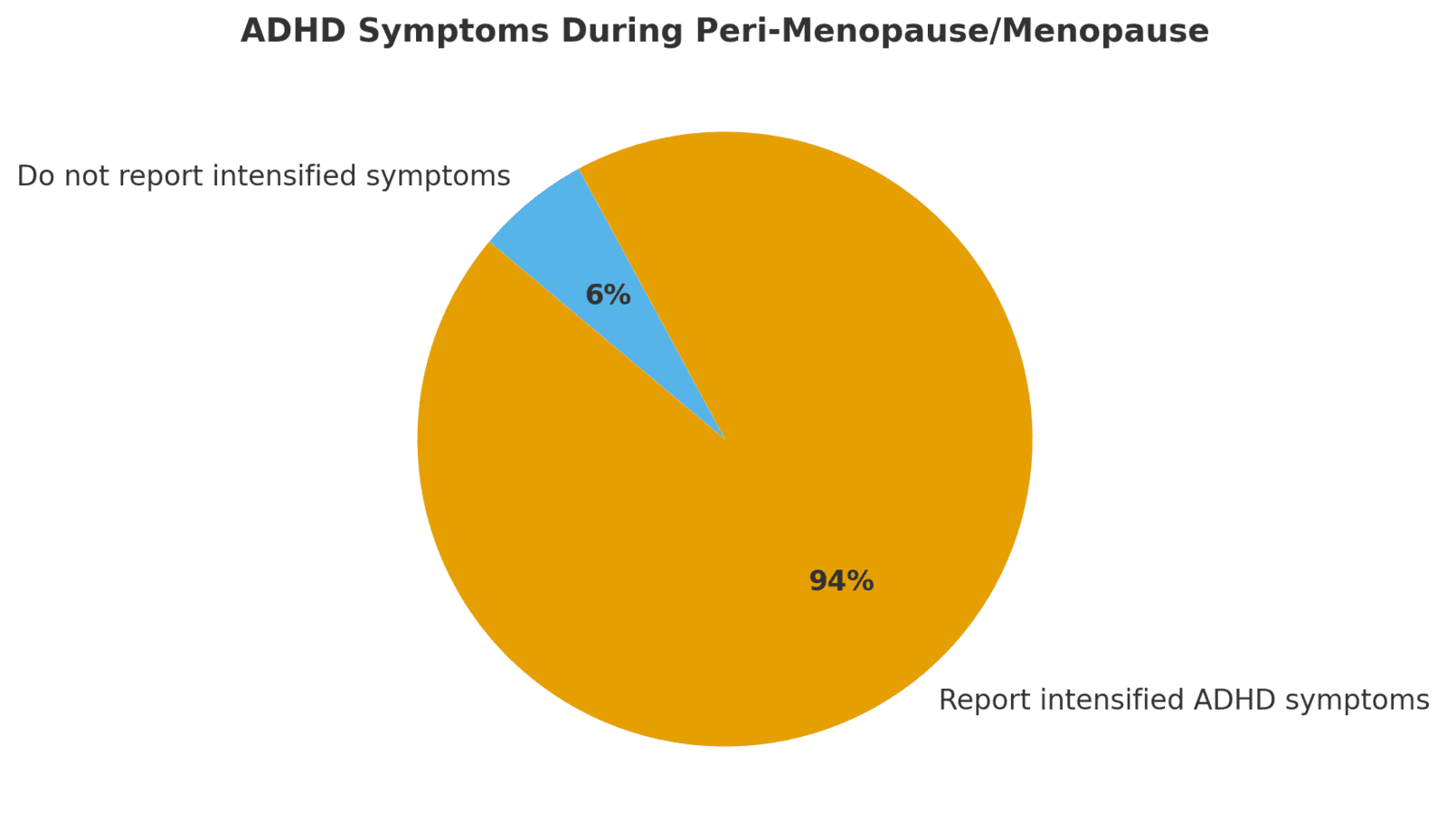
94% of women with ADHD report worsened symptoms during peri-menopause or menopause (ADDitude Magazine, 2022).
Across Scotland and the wider UK, more and more women are receiving an ADHD diagnosis for the first time in their 40s, 50s, or even later. For some, this is the missing piece that explains years of struggling with focus, memory, or emotional intensity. For others, the symptoms seem to have appeared out of nowhere during peri-menopause.
In fact, research shows that 94% of women with ADHD report intensified symptoms during peri-menopause or menopause.
Why ADHD Symptoms Often Worsen in Midlife
There are a few important reasons why this happens:
Hormonal changes – Oestrogen and progesterone support dopamine, serotonin, and acetylcholine. As levels fluctuate and decline, the brain loses some of its natural “buffer,” leading to brain fog, forgetfulness, distractibility, and emotional swings.
Life stage pressures – Many women in midlife juggle demanding careers, teenagers, or caring for ageing parents — all of which place extra load on the nervous system.
Unmasking hidden ADHD – Some women had milder or masked symptoms earlier in life. As oestrogen declines, those symptoms can suddenly become harder to manage.
Medication response – Women already on ADHD medication may notice their usual prescription feels less effective during peri-menopause.
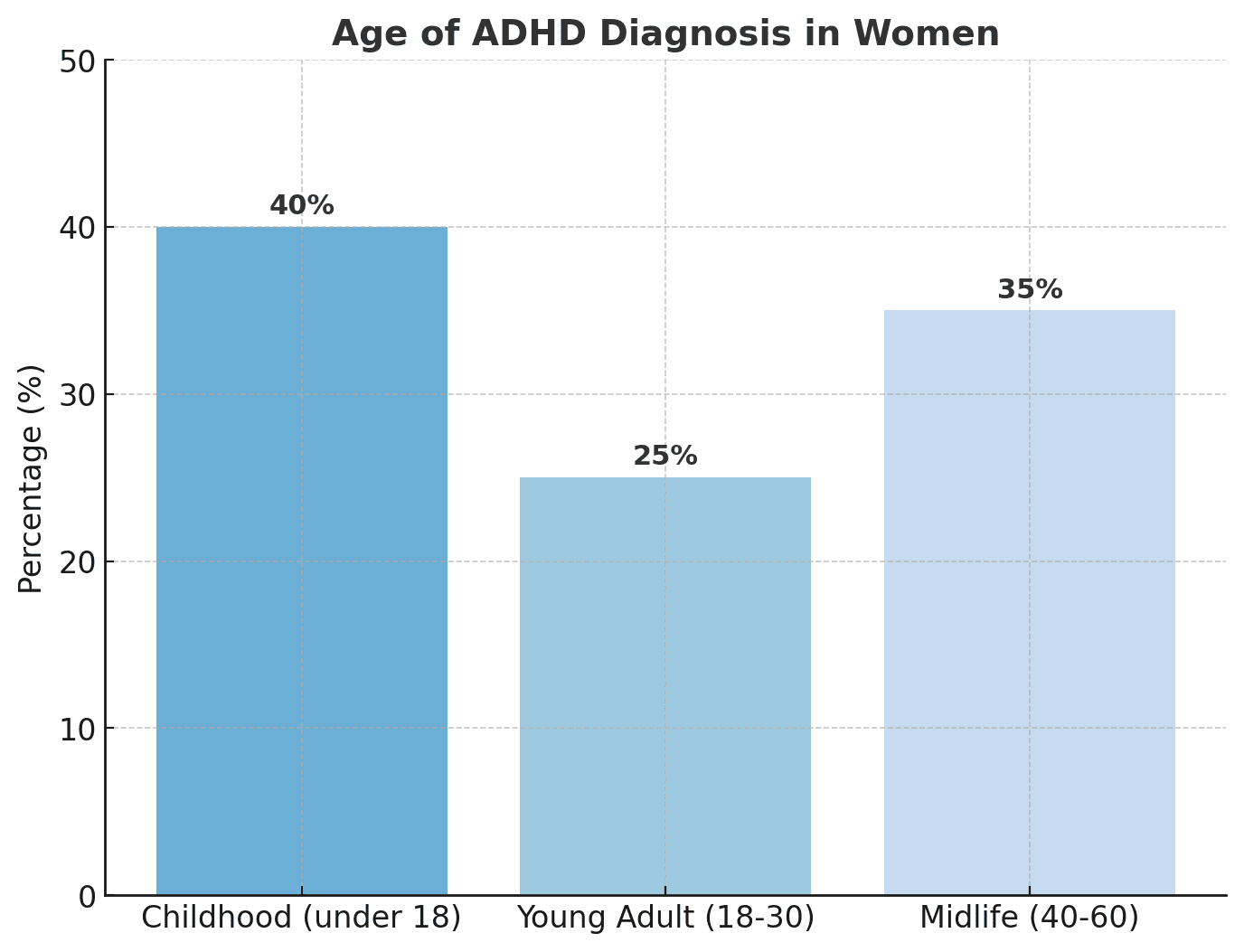
An increasing number of women are being diagnosed with ADHD for the first time in midlife (illustrative trend, based on reports from ADHD organisations and advocacy groups).
Overlap with Nervous System Dysregulation
The traits often labelled as ADHD — restlessness, hyperfocus, distractibility, emotional intensity — can also be understood as signs of a dysregulated nervous system. During peri-menopause, with hormonal shifts and life stressors, this dysregulation often becomes more pronounced.
This is why so many women only recognise themselves in ADHD descriptions at this stage of life.
Natural and Holistic Ways to Support ADHD in Peri-Menopause
There are many practical ways to support the nervous system and ease symptoms naturally:
Nutrient support – Magnesium, zinc, iron, B vitamins, and omega-3s are often depleted both in ADHD and during menopause. Replenishing these can restore balance.
Breathwork and somatic practices – Techniques that calm the nervous system (such as extended exhales or 9D Breathwork journeys) help dial down intensity.
Blood sugar balance – Protein-rich meals and steady blood sugar reduce both brain fog and mood swings.
Rhythm and rest – Consistent sleep–wake times, daily routines, and movement breaks provide stability for both hormones and attention.
Addressing hidden stressors – Bioresonance can help highlight deeper imbalances, while shamanic practices can support emotional release and clarity.
A Wider Perspective for Women in Scotland
If you are a woman in your 40s, 50s, or 60s noticing ADHD-like traits for the first time, you are not alone. This stage of life brings unique challenges, but also an opportunity: to pause, reset, and support your nervous system in new ways.
At Torus Tree, based in Perthshire, Scotland, this is at the heart of our work. We bring together:
Bioresonance therapy – to uncover hidden stressors and support balance at the energetic level.
9D Breathwork journeys – designed to regulate the nervous system and help release old patterns.
Shamanic practices – opening pathways to deeper self-understanding and connection.
Community events – where women share tools, experiences, and new ways of living in balance.
ADHD in midlife doesn’t have to mean overwhelm. With the right support, symptoms can soften, balance can return, and this chapter of life can become one of renewal and potential.
